
Transcribing an audio file is one of the highest-leverage actions a B2B content team can take. Every podcast episode, recorded interview, and webinar recording contains content that can be repurposed, distributed, and indexed, but only if it exists as text. Audio locked in a file benefits no one who did not listen.
This guide walks through exactly how to transcribe an audio file, which methods work for different situations, and how to build a transcription workflow that scales with your podcast program.
There are four primary methods for transcribing audio files. Each trades time, cost, and accuracy differently.
Automated speech recognition (ASR) tools convert audio to text using AI models. This is the fastest method, typically producing a full transcript in minutes at a fraction of the audio length.
The major automated transcription tools used by B2B podcast teams in 2026:
Descript: Records and transcribes natively, or accepts uploaded audio files. The text-based editing interface is the most intuitive available and lets you edit audio by editing transcript text. Free tier provides one hour per month, paid plans start around $24/month.
Otter.ai: Processes uploaded audio files and provides clean speaker-labeled transcripts. Strong for two-speaker interview formats. Free tier offers 300 minutes per month.
Riverside.fm: Transcribes automatically during or after recording, with speaker-separated tracks that improve accuracy. Best for teams already using Riverside for remote recording.
Whisper (OpenAI): Open-source model with best-in-class accuracy. Runs locally via command line or integrates with third-party tools. Free but requires technical setup.
Rev.com: Automated transcription at $0.25 per minute with optional human review upgrade. No free tier, but per-minute pricing makes it accessible for low-volume use.
Automated transcription is the right method for most B2B teams. Speed is the primary advantage. A 60-minute episode transcript is ready in under five minutes on any of these platforms.
Human transcription services employ reviewers who listen to audio and produce verified transcripts. Accuracy is higher than automated tools, particularly for technical content, heavy accents, and multi-speaker formats.
The cost premium: human transcription typically runs $1-$2 per minute of audio, compared to free or cents per minute for automated options. A 45-minute episode costs $45-$90 for human transcription.
For B2B podcast content where the transcript feeds directly into client-facing publications, analyst briefings, or sales materials, the accuracy premium is often justified. For internal use or SEO-focused show notes, automated tools usually suffice.
Manual transcription means typing the transcript yourself, or having a team member do it. It is the slowest method by far. A reliable rule of thumb: manual transcription takes 4-6 hours for every hour of audio. That time investment rarely makes sense for a B2B team.
Manual transcription is appropriate in exactly one scenario: extremely short clips (under two minutes) where setting up an automated tool or paying for a service would take longer than typing it out.
The most efficient high-accuracy method for B2B teams is automated transcription followed by a targeted human review. Run your audio through an automated tool, then have a human reviewer correct proper nouns, technical terms, speaker labels, and formatting, without re-doing what the AI got right.
This hybrid approach produces human-level accuracy at a fraction of the time and cost of fully manual or fully human-service transcription. For weekly B2B podcast production, it is the workflow most professional production teams use.
For teams new to audio transcription, here is the step-by-step process using Descript as the example tool:
Step 1: Create a Descript account at descript.com. The free tier covers one hour of transcription per month.
Step 2: Create a new project and click "Import" to upload your audio file. Descript accepts MP3, WAV, M4A, and other common formats.
Step 3: Descript will transcribe the file automatically. Processing time varies: expect one to three minutes for a standard 30-60 minute episode.
Step 4: Review the transcript in the text editor. Descript highlights low-confidence words, which guides your review toward sections most likely to contain errors.
Step 5: Correct any errors. Pay particular attention to proper nouns, brand names, technical terms, and speaker labels. These are the most common failure points for automated tools.
Step 6: Export the transcript. Descript exports to TXT, DOCX, SRT (for captions), or copy-paste from the editor.
Step 7: Use the exported text as the source material for show notes, blog posts, or other content derivatives.
Transcription accuracy is not purely a function of which tool you use. The quality of your source audio file has a significant effect.
Formats that produce best results: WAV and AIFF (uncompressed) produce the cleanest transcripts. MP3 at 128 kbps or higher is acceptable. Highly compressed audio or low-bitrate recordings reduce accuracy.
Single-track vs. multi-track: Uploading a mixed-down stereo file (all voices on one file) is less accurate than uploading separate per-speaker tracks when the option is available. Riverside.fm and Squadcast produce per-speaker recordings that most transcription tools can process separately for better results.
Background noise: HVAC noise, keyboard clicks, traffic, and room reverb all degrade transcription accuracy. Running basic noise reduction on source audio before transcription improves output quality meaningfully.
Speaker clarity: Fast speech, mumbling, or heavy crosstalk creates challenges for every automated tool. Briefing guests to speak at a measured pace and avoid talking over each other is the simplest accuracy improvement available.
The transcript is not the end product. It is raw material for a range of content assets. Here is how B2B podcast teams extract value from episode transcripts:
Show notes and episode pages: A transcript provides the source content for detailed show notes. Structured correctly, these pages index for long-tail search queries around episode topics.
Blog posts: A 45-minute expert interview transcript contains enough material for two to four substantive blog posts. The editing process involves extracting key themes, structuring them into standalone narratives, and writing transitions. The research is already done.
Social content: Direct quotes from guests and hosts make high-performing LinkedIn posts. Pull the three to five most quotable lines from each transcript for the episode promotion schedule.
Sales enablement: For B2B brands that produce customer or prospect interviews as podcast content, transcripts create searchable archives of product feedback, objections, and buying criteria.
Internal knowledge management: For thought leadership shows featuring executive perspectives or industry expert conversations, transcripts become a searchable record of ideas and positions useful for sales, marketing, and product teams.
For a detailed look at structuring the repurposing workflow from transcript to multi-channel content, see podcast transcription services: complete B2B guide.
Transcribing from compressed or edited audio: Always transcribe from the cleanest, highest-quality audio file available. Do not transcribe from a heavily compressed distribution file if you have access to the original recording.
Publishing unreviewed transcripts: Automated transcripts contain errors. Publishing them directly as show notes or blog post source material embeds those errors in your content. Always review before using output.
Ignoring speaker labels: For interview-format shows, accurate speaker attribution matters. A transcript that labels all speech as "Speaker 1" and "Speaker 2" requires re-labeling before it can be used for content creation. Get this right in the transcription step rather than correcting it downstream.
Not storing transcripts systematically: Transcripts have ongoing value. A show notes editor six months from now, a sales rep pulling a quote, or a researcher looking for precedent in past episode content all benefit from accessible, organized transcripts. Build a file structure that stores transcripts with episode records from the start.
Using transcription without formatting it for its intended use: A raw transcript and a readable blog post are not the same thing. Plan for a formatting and editing step between transcript output and published content.
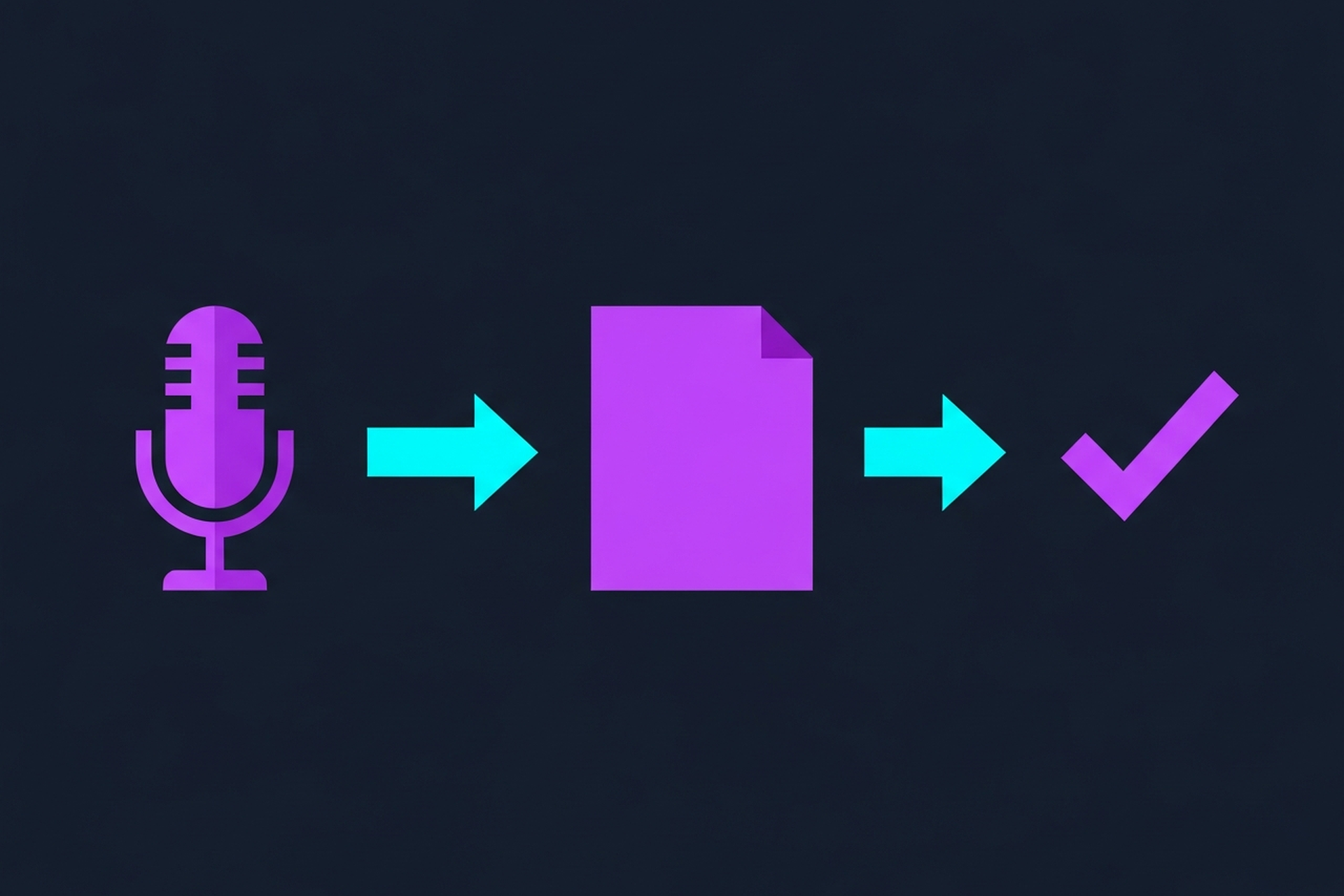
For B2B teams producing consistent podcast content, transcription needs to be a repeatable process, not a one-off task. Here is the workflow architecture that scales:
This workflow adds minimal overhead to a production schedule while ensuring transcripts are available for every content use case from the moment an episode enters post-production.
For B2B teams at scale, managing transcription as a standalone workflow creates operational overhead that compounds across episodes. A production partner that includes transcription in the service package eliminates that overhead entirely and integrates it with editing, mixing, and content repurposing in a single workflow.
If your team is spending meaningful time on transcription management or transcript editing, that time likely has better applications in strategy and audience development.
Connect with the Podsicle Media team to see how a full-service production relationship handles transcription alongside every other step in the production and repurposing workflow. We will show you exactly what the process looks like and what it frees your team to focus on.