Knowing how to make podcast video is no longer optional for B2B teams that want their show to travel further. Audio-only episodes live on podcast apps. Video episodes live on YouTube, get clipped for LinkedIn, surface in Google search results, and compound over time in ways a standard RSS feed rarely does. This guide walks through everything: why video matters for company podcasts, what equipment fits different budgets, how to record audio and video simultaneously, how to edit the result, and where to distribute it so your content keeps working after publish day.
Video podcasts are not just for consumer creators. B2B brands benefit from them in specific, measurable ways.
YouTube discoverability. YouTube is the second-largest search engine in the world. An audio-only podcast has no presence there. A video episode, properly titled and described, can rank for search queries your target buyers are already typing. That is free, compounding organic reach your audio-only competitors are not capturing.
LinkedIn native clips. Short clips cut from a video episode perform significantly better on LinkedIn than links to a podcast player. Native video autoplay stops the scroll in a way that a preview card does not. A 60-second clip from a guest interview can drive more profile visits and connection requests than a full-episode share.
Trust signals. Seeing faces builds credibility faster than hearing voices alone. For B2B shows where the goal is to establish thought leadership or generate pipeline, that credibility gap matters.
Spotify video. Spotify now supports video podcasts for eligible shows. Adding a video feed puts your show in front of Spotify's growing audience in a format competitors have not yet adopted.
If you are still weighing whether a podcast is right for your company, read how to launch a company podcast before diving into the video layer.

You do not need a television studio to produce a watchable video podcast. The right setup depends on how much you are willing to invest and how polished you want the output to look.
Most modern laptops ship with cameras that are good enough to start. If you want a step up, a dedicated webcam such as the Logitech Brio or the Elgato Facecam delivers 1080p or 4K footage without needing to learn anything about camera settings. Pair a webcam with a USB condenser microphone (Blue Yeti, Rode NT-USB) and a ring light, and you have a functional video podcast setup for under $200 total.
This tier is ideal for: teams testing whether video is worth the effort before committing a larger budget.
A mirrorless camera such as the Sony ZV-E10 or the Canon EOS M50 mounted on a tripod is a meaningful upgrade over any webcam. Combine it with a dedicated audio interface and a dynamic microphone (Shure SM7B, Rode PodMic) for broadcast-quality audio. Add a key light and a simple backdrop, and episodes look genuinely professional.
This tier is ideal for: companies that have validated their format and want a repeatable, elevated look without hiring a full production crew.
A dedicated recording space with acoustic treatment, multiple camera angles, professional lighting rigs, and a hardware audio mixer is the studio tier. This is where most high-production B2B shows land after 20 to 30 episodes, once the show has proven its value and earned a dedicated budget.
For a full comparison of recording and editing software across every budget level, see the best podcasting tools for B2B teams.
Equipment choices mean little if the room is wrong. Three variables matter most.
Lighting. Natural light from a window works well if the source is in front of your face, not behind you. A key light placed at roughly 45 degrees from your face, at eye level, eliminates the flat, washed-out look that comes from overhead room lighting. A cheap ring light is better than no dedicated light.
Background. A clean, uncluttered background reads as professional. A blurred virtual background is a fallback, but motion artifacts around your head are visible and distracting. A real background with some depth (bookshelf, branded wall, simple color) is almost always better.
Acoustics. Hard surfaces reflect sound and produce reverb that is immediately noticeable to listeners. Recording in a smaller room with soft furnishings (rugs, curtains, upholstered chairs) reduces echo without spending anything on acoustic panels. If you hear your voice bouncing back at you, the room needs treatment before the microphone does.
Remote interviews require a platform that captures each participant's audio and video locally, then syncs the tracks in post. This is called local recording and it protects you from internet dropouts that would otherwise ruin an episode.
Riverside.fm is the most widely used option for B2B video podcasts. It records each participant's audio and video in high quality locally, uploads progressive backups during the session, and delivers separate tracks for each speaker in post-production. It also includes a browser-based editor for quick clips.
SquadCast is comparable to Riverside and has strong integrations with Descript. Both platforms support up to four or five guests in separate tracks, which is sufficient for almost every B2B podcast format.
Descript handles both recording and editing. You can record directly in Descript, get auto-transcribed audio and video, and edit the episode by editing the transcript. For teams that want to minimize the number of tools in their stack, it is a compelling all-in-one option.
For solo episodes or single-location recordings, OBS Studio is free, handles multiple camera inputs and screen capture, and outputs to any file format. The learning curve is steeper than the dedicated podcast platforms, but the flexibility is unmatched.
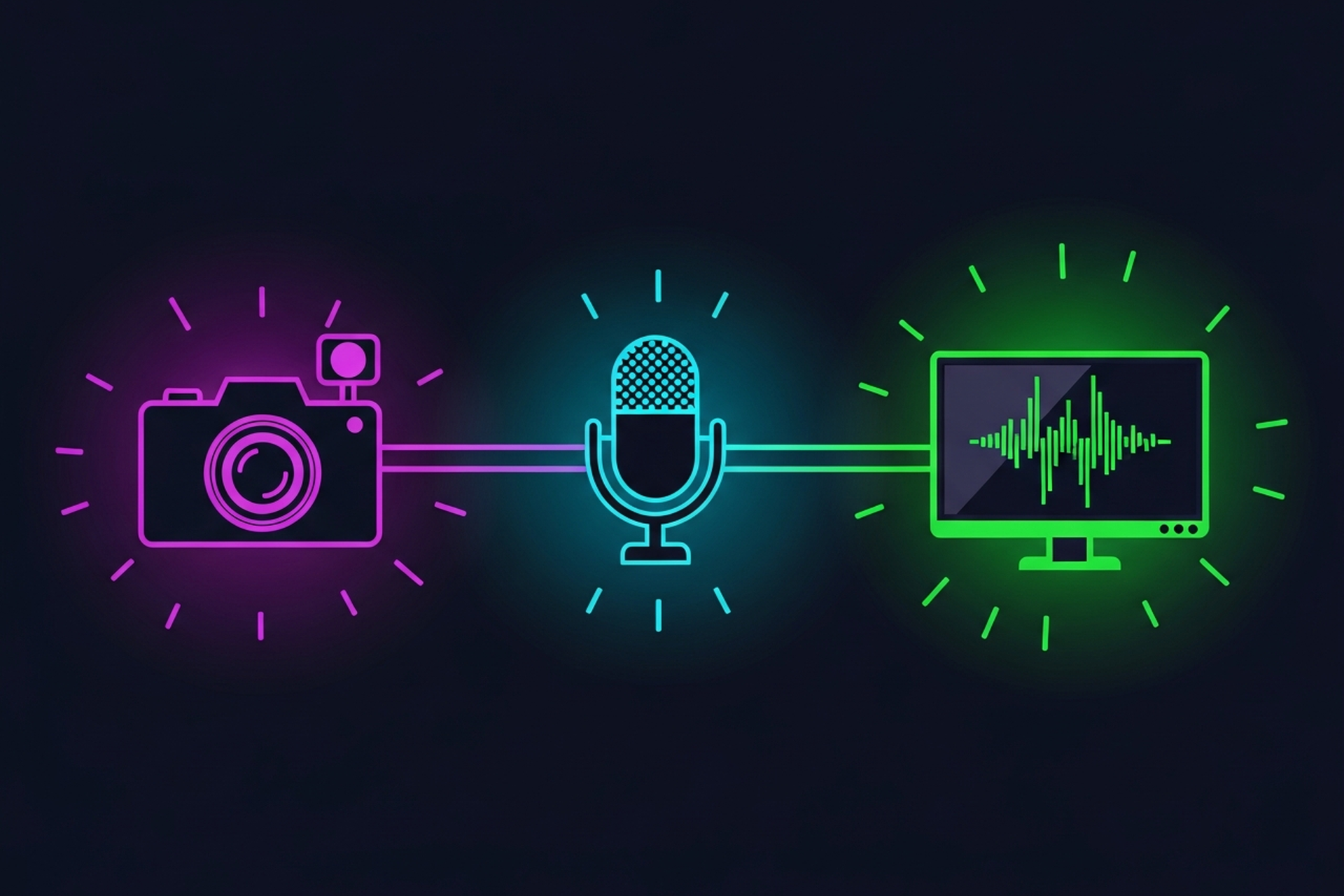
The most common mistake in video podcast production is treating audio and video as two separate workflows. They should be captured together, in a single take, on a single platform.
Before you press record, run a pre-roll checklist:
Record a short test before starting the actual episode. Play it back before your guest joins so you catch issues before they become permanent problems in the final file.
For remote guests, send a one-page prep document before the session. Include how to position their camera (eye level, not looking up from a laptop), what to do about lighting, and how to use headphones to prevent echo. Guest audio quality is the variable you can influence least during recording and most before it.
Video podcast editing does not require mastering a professional video editing suite. Most B2B shows use one of three approaches.
Descript remains the simplest option for transcript-based editing. Remove filler words, cut sections, and rearrange the conversation by editing text. Video follows the edits automatically. Export as an MP4 for video distribution and as a WAV or MP3 for audio-only feeds.
Adobe Premiere Pro and DaVinci Resolve (free version available) give you full control over color grading, graphics, and multi-track audio mixing. These are worth learning if your show has a complex format or if you have someone on your team with existing video editing skills.
Riverside's Magic Clips and similar AI tools in video podcast platforms can automatically identify quotable moments and generate short clips for social. These are useful for content repurposing at volume but typically need a human review pass before publishing.
A standard edit pass for a 30-minute B2B episode includes: removing silence and long pauses, cutting obvious mistakes and restarts, adding an intro graphic or title card, applying consistent color and audio treatment, and exporting separate files for video distribution and audio-only feeds.
Keep a video master file (ProRes or high-bitrate MP4) before exporting compressed delivery files. You will want it when platform specs change or when you need to re-export clips later.
A finished video episode has at least four places it can live.
YouTube is the highest-priority video destination for most B2B shows. Upload the full episode as a standard video, write a keyword-rich description, add timestamps as chapters, and create a custom thumbnail that includes the guest name and episode topic. Consistency matters: publish on the same day and time each week so subscribers know when to expect new content.
Spotify video supports video podcasts through a separate video feed. Eligibility requires a minimum number of subscribers and consistent publishing history. Check Spotify's current creator requirements before building video into your launch workflow, as eligibility criteria are updated periodically.
LinkedIn rewards native video. Rather than sharing a YouTube link, upload 60 to 90-second clips directly to LinkedIn as native video posts. Clip the most quotable or surprising moment from each episode, add captions (85 percent of LinkedIn video is watched without sound), and include a text post that adds context rather than just promoting the episode.
Your website as an embedded video on the episode page improves time on page and gives you a platform-independent canonical destination for each episode.
Short clips are where video podcast ROI compounds. A single 45-minute episode can produce six to ten standalone social clips, each capable of reaching an audience that will never listen to the full episode.
Identify clip-worthy moments during or immediately after recording. Guest stories, specific data points, contrarian takes, and concrete advice all perform well as standalone clips. Moments that require context from earlier in the episode do not.
Clip specs by platform: LinkedIn native video performs best at 60 to 90 seconds in 1:1 or 4:5 aspect ratio. Instagram Reels and TikTok prefer 9:16 vertical at 30 to 60 seconds. YouTube Shorts accept up to 60 seconds in 9:16. For B2B shows, LinkedIn is almost always the primary short-form platform.
Add captions to every clip. Captions are not optional. They make clips accessible and dramatically increase completion rates on platforms where autoplay defaults to mute.
Tools like Opus Clip, Riverside's Magic Clips, and Descript's social clips feature automate much of the clip identification and captioning workflow. Treat the output as a starting draft that gets a human review, not a finished product.
The pathway from zero to a polished video podcast looks like this: start with a webcam tier setup to validate your format, move to a prosumer setup once the show has found its audience, build a clip distribution workflow from episode one so short-form content becomes a habit rather than an afterthought, and treat YouTube as a primary channel alongside your audio RSS feed.
The teams that benefit most from video podcasts are the ones that plan for video before the first episode is recorded, not the ones that try to retrofit it later. Getting the recording right at the source is always cheaper than fixing it in post.
If you want help building a video podcast workflow that fits your team's capacity, the Podsicle Media team works with B2B companies at every stage of production. Browse our B2B podcast production services to see how we approach video podcasting for company shows, or get in touch with us directly to talk through your specific setup.