Most B2B marketers have heard the pitch: launch a podcast, build authority, generate pipeline. But before the strategy conversation happens, a lot of people are quietly asking a more basic question. What is a podcast and how does it work, exactly, and is this something a company like mine should actually be doing?
Fair question. And the honest answer is more nuanced than the hype suggests.
A podcast is on-demand audio content distributed via RSS feed to any platform a listener subscribes to. You record an episode, upload it to a podcast hosting provider like Transistor, and that host automatically syndicates it to Spotify, Apple Podcasts, YouTube, and anywhere else your audience listens. Subscribers get notified automatically. No algorithm gatekeeping, no social platform deciding who sees what.
It is a direct distribution channel you own outright.
That last part matters more than most B2B marketers realize. A podcast feed cannot be deprioritized by a platform update. Once a listener subscribes, they receive every episode until they choose to unsubscribe.
Video is increasingly part of the picture, too. According to podcast platform statistics from Riverside, YouTube is now the most-used podcast platform globally, with about 33% of listeners using it as their primary app. Any B2B podcast content strategy built in 2026 should plan for video-first recording, even if audio distribution remains the dominant delivery method.
There are roughly two kinds of podcasts. Consumer shows chase downloads. B2B branded shows chase outcomes.
True crime, comedy, and news podcasts measure success by audience size because their monetization model is advertising: impressions sold to sponsors. A B2B company running a branded podcast should operate with a completely different definition of success.
The right metrics for a B2B branded show are pipeline influenced, deals accelerated, relationships opened, and brand authority compounded over time. According to research on B2B podcast deal velocity, companies with well-executed branded podcast programs see deals close 23% faster, with average contract values running 47% higher on podcast-influenced opportunities. Downloads have nothing to do with that.
This changes everything about how you build a strategy.
The audience fit argument is stronger than most people realize.
According to research on B2B podcast listening habits, 78% of business owners and founders listen to podcasts weekly, and 55% listen daily. Your buyers are already in the medium. A branded show meets them during their commute, their workout, or their lunch, not during a 30-second ad interception they are actively ignoring.
Depth of attention is the other half of the equation.
The attention dynamic is also different from every other content format. A blog reader skims. A LinkedIn post gets two seconds of consideration. A podcast listener commits to 30 to 60 minutes of focused attention on a single topic.
For B2B companies with complex products, long sales cycles, and nuanced value propositions, that depth of engagement is hard to find anywhere else.
The channel is also still underbuilt relative to its audience size. Most industries have a handful of shows competing for an audience that has almost no other audio content on their specific domain. That gap closes eventually. Companies building now capture it first.
A well-built strategy gives a branded show three distinct jobs.
Authority and top-of-funnel awareness. Each episode positions your brand or executive team as a credible voice in your category. Over time, the cumulative body of episodes becomes evidence of genuine expertise. Buyers researching your space find your show, listen to a few episodes, and arrive at a sales conversation already informed and pre-disposed.
Sales enablement. Individual episodes become assets your sales team can share. A 40-minute conversation with a CFO about a specific operational challenge is a better sales tool than most whitepapers. Clips, transcripts, and summaries extend the reach of every recording into active deal cycles, where context and credibility matter most.
Relationship development. Inviting a prospective customer, strategic partner, or target account executive to be a guest on your show is one of the most natural B2B relationship-building moves available. It gives them a platform, positions your company as a connector, and creates a shared experience that cold outreach cannot replicate. Companies using this approach have converted nearly half of strategically selected guest invitations from target accounts into active pipeline.
If you want to go deeper on the launch side before building out strategy, our guide to starting a company podcast covers the full process with a B2B lens.
Here is where the ROI math changes significantly.
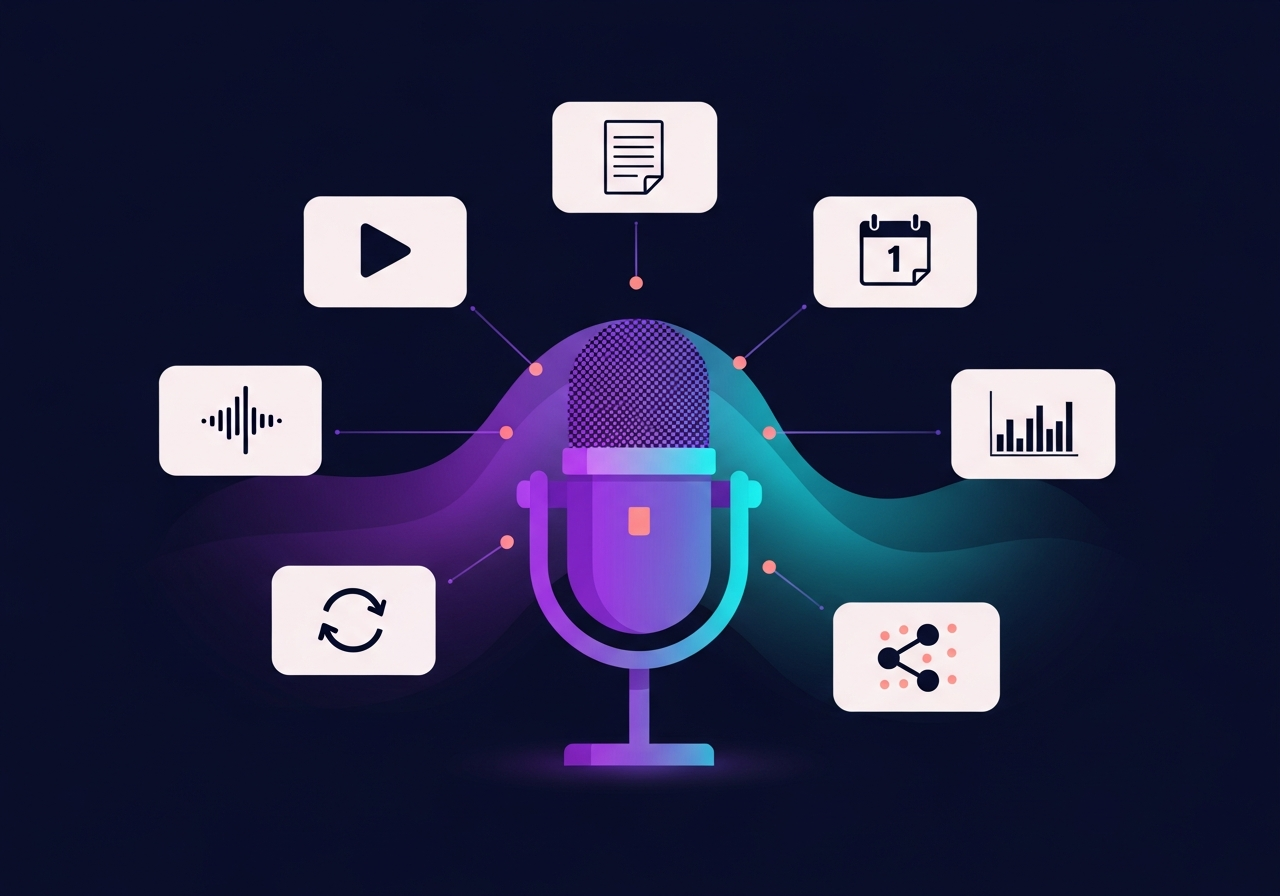
A single 45-minute episode, properly repurposed, produces: audiograms for LinkedIn and short-form video, a full blog post derived from the transcript, five to eight short video clips, pull quotes for social posts, a newsletter segment, show notes optimized for search, and a sales follow-up asset. Research on B2B podcast content repurposing shows a single recording session can generate 20 or more distinct content assets when the repurposing workflow is built into the production process.
That flips the cost-of-production conversation entirely. You are not spending budget on a podcast. You are building the source of record for your entire content calendar.
This is the core of what a production partner like Podsicle Media handles: not just editing and distributing episodes, but systematically turning each recording into a full library of content assets that work across every channel your audience uses.
Here is the number that rarely appears in "start a podcast" posts: most shows never make it past the first few episodes, and 94% of podcasts never reach episode 100, which is where consistent results begin to compound.
The reason is almost never the idea. It is the operational weight. Editing takes longer than expected. Guest scheduling falls apart. Show notes pile up. The team that was energized at launch has three other priorities by month four.
A B2B podcast content strategy is not just a content plan. It is a production system. The shows that build sustained authority have infrastructure behind them, not just enthusiasm at the start.
To actually perform, a strategy needs to address more than "pick a topic and record." A complete framework includes:
Most B2B teams skip half of these steps. They start recording and figure out the rest as they go. That is the path to episode three and a very quiet feed.
For a closer look at the metrics side once the show is live, our breakdown of B2B podcast benchmarks and measurement covers what to actually track and why downloads are the wrong number to optimize for.
Podcasting works for B2B. The data on that is clear. It works specifically when the show is built with intention, maintained with proper infrastructure, and measured against business outcomes rather than vanity metrics.
If your team has the capacity to produce and manage a show consistently, building in-house can work. If you need an expert team handling everything except showing up and recording, a done-for-you model is worth serious consideration. Podsicle Media works with B2B companies at exactly that point: strategy built up front, production handled end-to-end, every episode repurposed into a full content library.
Get your free podcasting plan to see what the right setup looks like for your goals.