February 19, 2026

How to Do a Podcast Launch: What Most B2B Teams Miss

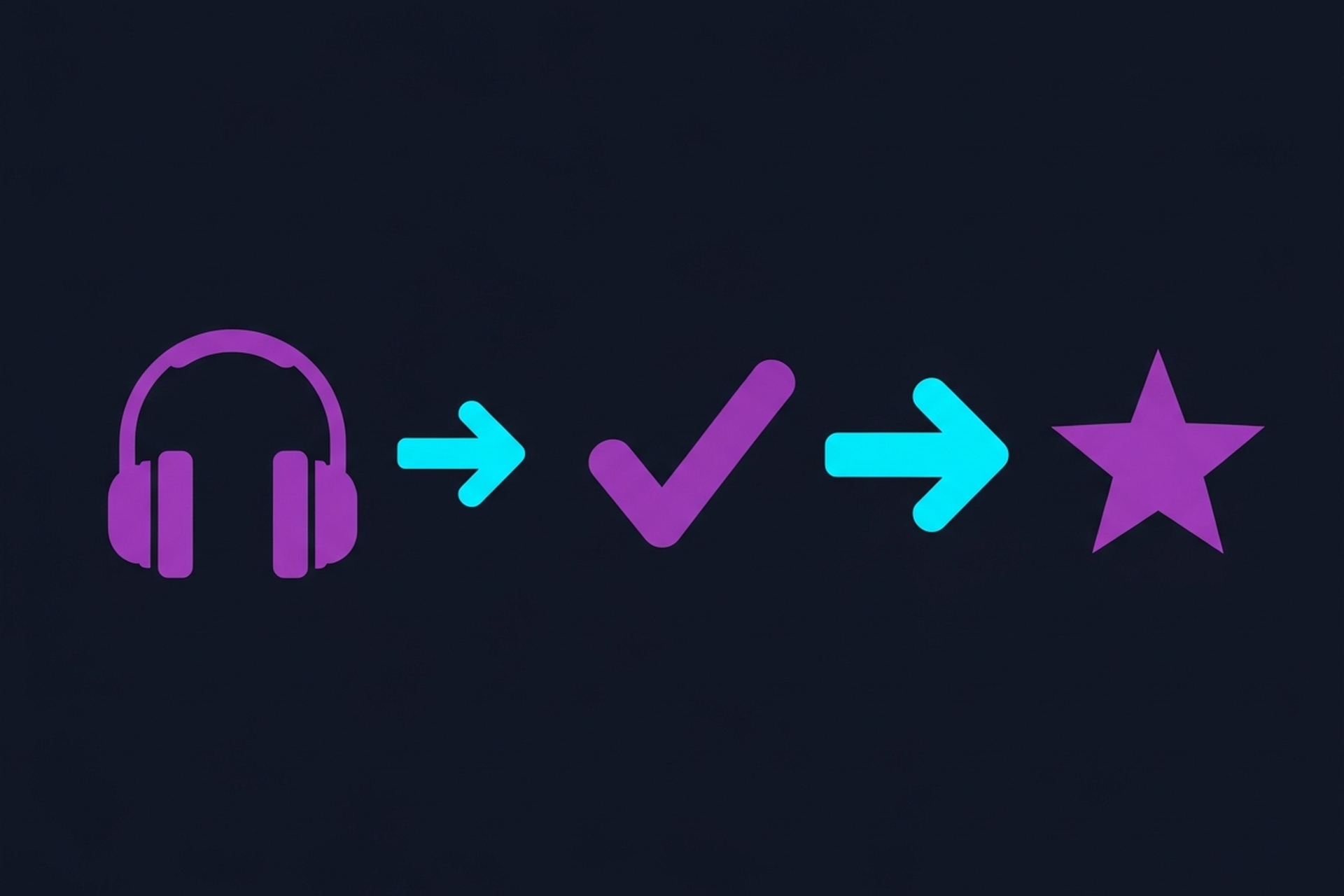
Diagram of a B2B podcast launch sequence from pre-production to first 90 days

How to Do a Podcast Launch: What Most B2B Teams Miss

Diagram of a B2B podcast launch sequence from pre-production to first 90 days

Most B2B podcasts that fail do not fail because the host is bad or the topic is boring. They fail because the launch was treated as a technical task rather than a strategic one. Someone figured out the RSS feed, recorded three episodes, uploaded them, and assumed the rest would follow.

It does not work that way.

A podcast launch is a content channel launch. It requires the same intentionality as launching a newsletter, a YouTube channel, or a new content vertical. This guide covers what a successful B2B podcast launch actually looks like: the decisions you need to make before you record, the mechanics of a proper launch sequence, and how to build momentum in the first 90 days.

The Pre-Launch Phase: Where Most Launches Go Wrong

The most common mistake is starting with production before finishing strategy. Teams get excited about the idea, buy equipment, book a guest, record an episode, and then realize they do not have a clear audience, a clear format, or a clear reason someone should keep listening.

Do this work before you record episode 1:

Define Your Audience Precisely

"B2B marketers" is not an audience definition. "Mid-market B2B SaaS marketing leaders who need to justify budget to a CFO" is. The more specific your audience, the more every other decision becomes easier: topic selection, guest selection, episode length, tone, distribution channel.

Write one sentence that completes this: "My show is for [specific person] who wants to [achieve specific outcome] without [frustrating obstacle]."

Choose a Format and Commit to It

The most durable B2B podcast formats are:

  • Expert interview: One host, one or two guests, 25 to 45 minutes
  • Solo commentary: One host, no guests, 10 to 20 minutes
  • Panel or roundtable: Multiple hosts or guests, 30 to 45 minutes
  • Case study / narrative: Edited story format, 15 to 30 minutes

Each format has different production requirements, different audience expectations, and different scalability. Pick one. The format that does not match your team's capacity will not survive past episode 10.

Commit to a Publishing Cadence

Weekly is ideal for building habit and listener loyalty. Bi-weekly is acceptable and more sustainable for most teams. Monthly is too slow to build momentum.

Choose a cadence your team can hold for 12 months, not the cadence you can hold for 3 months when enthusiasm is high.

For a full treatment of the strategy decisions that underpin a successful launch, the complete B2B guide to launching a company podcast covers all of this in depth.

The Launch Sequence

A podcast launch is not a single moment. It is a sequence that spans roughly 6 to 8 weeks.

Phase 1: Pre-Production (Weeks 1 to 4)

This is everything that happens before you record a single episode:

  • Finalize the show name and description. Your show description is your most important SEO asset in podcast directories. Write it to include the keywords your audience would search, not just marketing language.
  • Produce your trailer. A 60 to 90 second trailer tells potential listeners what the show is about, who it is for, and what they will get from it. Submit this to podcast directories before your first episode. It primes the algorithm and gives you a presence while you are still building your episode backlog.
  • Build your episode backlog. Launch with a minimum of 3 episodes ready to go. Ideally 5 to 6. This gives new listeners who discover the show something to binge and signals that the show is real, not a pilot project.
  • Set up your RSS feed and hosting. Choose a podcast hosting platform, set up your RSS feed, and submit to Apple Podcasts, Spotify, Amazon Music, and YouTube Podcasts before your launch date. Approval takes 1 to 5 business days per platform.
  • Build your show notes pages. Create a page on your website for each episode before launch. SEO indexing takes time: pages published on day 1 will rank before pages published in month 3.

Phase 2: Launch Day and Launch Week

The goal of launch week is not downloads. It is subscriptions and early reviews. Downloads are a vanity metric at launch. Subscribers and reviews are signals that affect how podcast directories treat your show in recommendations and search.

  • Email your list. Every subscriber matters. Even a small list of 400 people can seed meaningful early momentum.
  • Post on LinkedIn. Not "our podcast launched." Post the best 90 seconds of episode 1 as a clip, or the sharpest insight from the episode as a text post. Give people a reason to care.
  • Ask directly for subscriptions and reviews. At the end of episode 1, say plainly: "If this was useful, subscribe and leave a review. It takes 60 seconds and it genuinely helps us reach more people." This works. Not asking is why most shows get no reviews.
  • Activate your network. Ask colleagues, customers, and partners to listen and subscribe in the first week. Not because of vanity, but because early engagement signals matter for directory algorithms.

Phase 3: The First 90 Days

This is where most shows fade. The launch excitement disappears, the team is back to full capacity on other work, and publishing the next episode starts to feel like a burden.

The shows that survive the first 90 days do three things:

  1. Treat publishing as a non-negotiable. It is not optional when it is inconvenient. An episode goes out on its scheduled day, every time. If production is the bottleneck, that is a process problem, not a content problem.
  1. Review metrics at day 30 and day 60, not day 1. Early download numbers are almost always disappointing and almost always irrelevant. What you want to see at day 30 is: are people finishing episodes? Are they coming back for the next one? Are new listeners finding the show through organic search?
  1. Compound the distribution work. Every episode should be promoted through every channel. If you published episode 8 but did not post about it on LinkedIn, you effectively did not publish it for most of your target audience.

What Separates Shows That Last from Shows That Don't

There are three factors that consistently differentiate B2B podcasts that build lasting audiences from those that stall:

Editorial consistency. The show has a clear point of view, and that point of view shows up in every episode. Listeners know what they are going to get. Predictability builds loyalty.

Production quality that respects the audience's time. This does not mean expensive. It means episodes are edited, not raw. Audio is clean. Episodes are the right length for their format (tight, not padded). When your show sounds professional, it signals that you take the audience seriously. For context on what quality production involves, see what professional podcast production looks like in practice.

A team that treats the show as a channel, not a project. Projects have end dates. Channels are ongoing. The shows that last are run by teams who think of the podcast the way they think of their email newsletter: something that ships every week, gets better over time, and compounds in value.

A Pre-Launch Checklist

Before you hit publish on episode 1:

  • Show name, description, and cover art finalized
  • Trailer episode produced and submitted to all platforms
  • 3 to 6 episodes recorded and edited
  • Show notes pages live on your website
  • RSS feed submitted and approved on Apple Podcasts, Spotify, Amazon Music, YouTube Podcasts
  • Email campaign drafted for launch week
  • LinkedIn launch content drafted and scheduled
  • Internal team briefed on where to direct inquiries about the show
  • Analytics set up: hosting platform stats, website show notes page tracking, UTM parameters on all promotional links

Ready to Launch Right?

Podsicle Media handles launch logistics, production, and distribution for B2B companies that want a podcast done correctly from day one. We set up the workflow so your team can focus on showing up and recording.

Talk to us about your podcast launch

If you are still in the planning stage, we can start there. If you have been meaning to launch for six months and something keeps blocking it, that is usually a production process problem. We can fix that.
Recommended Posts

Microphone on left, waveform in center, rocket on right showing video podcast production and launch process

Video Podcast Creation and Sharing: The Complete B2B Guide

How B2B companies create, produce, and distribute video podcasts, from recording setup to publishing on YouTube, LinkedIn, and podcast platforms.
Video player with text captions appearing below on a dark navy background with cyan-to-purple gradient

YouTube Video Transcription: A B2B Marketer's Complete Guide

How to transcribe YouTube videos for B2B content repurposing. Compare free tools, paid services, and workflows that turn video content into searchable text.
Video transcription workflow diagram for B2B podcast teams

Video Transcription for B2B Content Teams: A Practical Guide

How B2B marketing teams can use video transcription to power content repurposing, improve SEO, and get more from every recording they produce.

You want more

demand

reach

leads

revenue

trust

We can make it happen