Your buyers are already listening. Three out of four B2B decision-makers tune into podcasts regularly, and more than half of them are listening every single day. Corporate podcast production services are no longer a nice-to-have for ambitious B2B brands. They are how category leaders get into the ears of the exact people they need to reach.
But here is the part nobody puts in their agency pitch deck: 87% of B2B podcasts generate zero attributable pipeline. Not because audio quality was bad. Not because the host was boring. Because the vendor delivered execution without strategy.
This guide breaks down what full-service corporate podcast production actually includes, what it costs, and what to look for in a partner who will move the needle on revenue, not just download counts.
"Corporate podcast production" means different things to different vendors. Some will hand you an edited audio file and call it done. Others will build an entire content engine around your show. Knowing the difference before you sign a contract matters.
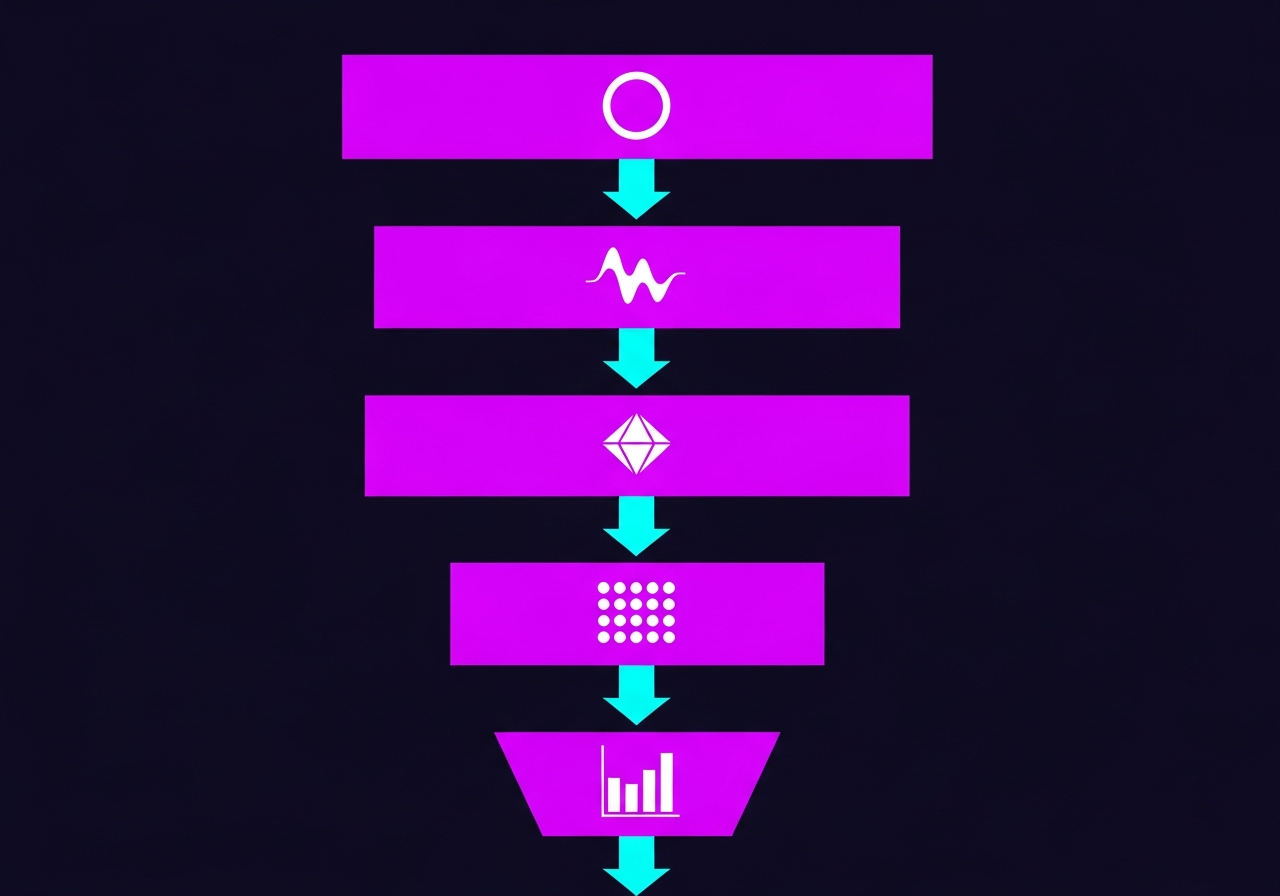
Full-service corporate podcast production services cover the entire lifecycle of a show, from the first strategy session to the last analytics report. Here is what that looks like end to end.

Each layer compounds on the one before it. A show with great strategy but no distribution dies in a folder. A show with great distribution but no strategy generates noise instead of pipeline. The vendors worth hiring understand how these layers connect.
This is where most agencies cut corners, and where the best ones earn their fees. A legitimate strategy engagement covers your ideal customer profile, competitive landscape, show format, and a guest roadmap mapped to your pipeline stages.
A strong B2B podcast pipeline strategy is not something you bolt on after recording ten episodes. It shapes every creative decision, from episode titles to guest selection to call-to-action placement. The agencies that skip this phase will tell you strategy is your job. It is not.
Actual production includes everything from pre-interview briefing documents to raw file management to final delivery. For video podcasts, this adds screen recording, B-roll integration, and multi-camera editing. Guest coordination involves scheduling, tech checks, release forms, and follow-up, and if your vendor does not offer this, you are doing it yourself.
This is where the ROI math gets interesting. One solid 40-minute interview can yield a full show notes page, a transcript optimized for SEO, six to eight social clips, a LinkedIn carousel, an email newsletter segment, and a blog post. Vendors who only deliver audio are leaving most of the value on the table.
For a deeper look at turning episodes into a full content system, see our guide on podcast production services.
B2B podcast production pricing varies wildly. Here is a straight breakdown of the three main tiers and what you get at each one.
Editing-only ($50 to $500 per episode) You record it, you coordinate guests, you handle strategy. The vendor cleans up audio, maybe adds music and levels. Fine for solopreneurs. Not appropriate for a corporate brand trying to build pipeline.
Full-service corporate ($2,000 to $20,000 per month) This is the middle tier where most serious B2B brands land. You get strategy input, full production, repurposing, and distribution. The range is wide because scope varies significantly. A Forbes piece on branded content trends from Content Allies notes that most growth-stage companies fall in the $3,000 to $7,000 per month range once they include repurposing and distribution.
Enterprise ($6,000 to $11,000 per episode) This is JAR Audio territory. Bespoke production, original music, documentary-style storytelling, massive amplification budgets. Built for brands with established thought leadership goals and a content team to integrate with.
Most of the companies reading this post should be evaluating the middle tier. The question is not just what you spend, it is what the production partner does with that budget strategically.
That stat deserves a moment. Nearly nine out of ten B2B branded podcasts produce zero measurable pipeline influence. The market is booming: global podcasting is projected to hit $131 billion by 2030, and B2B podcast investment is up over 45% in two years. Yet most corporate shows quietly disappear after episode twelve.
The pattern is almost always the same. A company hires a production vendor. The vendor delivers well-edited audio on schedule. Nobody defined what "success" meant. Nobody mapped the show to a buyer journey. Nobody built in a CTA strategy. After six months, leadership asks what the ROI is. Nobody can answer, and the show gets cancelled.
B2B podcast marketing strategy has to be built into the production engagement from day one, not retrofitted when someone asks for numbers. The vendors doing this right are the ones who ask "what does a successful listener do next?" before they record a single episode.
Good production shops deliver quality audio reliably and on time. Great production partners think like marketers and revenue operators. Here is how to tell them apart during the evaluation process.
They ask about your pipeline, not your preferences. A strategy-first vendor will want to know your average deal size, your sales cycle length, and which audience segments you are trying to reach. If the intake call sounds like a media production brief with no business context, that is a signal.
They build repurposing into the base package. Research on B2B podcast content repurposing and ROI consistently shows that repurposed content drives 3 to 5 times more attributed engagement than the raw episode alone. Distribution should not be an upsell. It should be the default.
They can show attribution frameworks, not just download dashboards. Downloads are a vanity metric for B2B brands. Meaningful corporate podcast production metrics include listener-to-lead attribution, account-level engagement, sales enablement clip performance, and pipeline influenced. Any vendor who cannot speak to this is not a B2B-native shop.
They have references in your deal size range. An agency that primarily works with consumer brands or solopreneurs will not have the muscle for enterprise guest coordination, compliance review, or integration with your marketing automation stack.
Agencies that specialize in B2B corporate podcast production and relationship-driven show growth for B2B brands have built reputations specifically in this space. Compare their intake process to what a generalist shop offers and you will see the difference immediately.
These terms get used interchangeably but they mean different things. Full-service typically implies strategic involvement. Done-for-you can mean just execution. Make sure you know which one you are buying.
For most B2B companies, the right answer is a done-for-you podcast solutions model that includes strategic oversight, not just production throughput. You should not have to project manage your podcast vendor. If you are chasing them for episode timelines or building your own show notes, you have bought the wrong thing.
Before you get on a discovery call, build a short internal brief. Know your show goals (thought leadership, demand generation, sales enablement, or community), your target audience segment, your publishing cadence target, and your budget range. Walk in with that brief and see how the vendor responds.
The right partner will push back on assumptions, ask about your buyers, and map their deliverables to your business outcomes. The wrong one will talk about mic quality and turnaround time.
B2B podcasting is a long game with compounding returns. The brands seeing serious results at year two are the ones who started with the right strategic foundation at episode one. The production partner you choose determines which path you are on.
Podsicle Media works exclusively with B2B brands to produce podcasts that are built for revenue, not just listening. Strategy comes first. Everything else follows.
Book a strategy call to see how we approach corporate podcast production for companies at your stage.